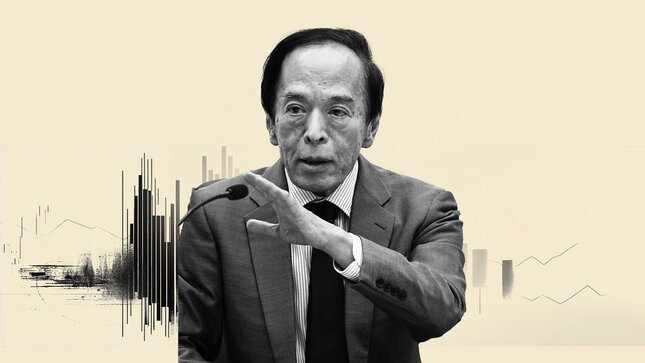
Bank of Japan Governor Kazuo Ueda said on Monday that postponing interest rate hikes for a long period could cause severe inflation and force the central bank to make a rapid policy adjustment.
Key quotes
I was able to have frank and good discussions with the Prime Minister and Ministers, and we will continue to engage closely with the Government.
I will not talk in detail about what I discussed with the Prime Minister and the Ministers.
Would you like to make a policy decision in December given wage information, as well as other data?
Delaying a rate hike for too long could cause severe inflation and force us to make a rapid policy adjustment.
A combination of the government’s proactive fiscal policy and the Bank of Japan’s adjustment to monetary support will help achieve a sustainable economic growth path.
The uncertainty we focused on, the impact of US tariffs and the US economic outlook, has declined significantly compared to a few months ago.
We want to clarify more about the path for future rate hikes once interest rates are raised to 0.75%.
Would you like to check whether data that was not available during the US government shutdown would not show significant negative information?
Market reaction
At the time of writing, USD/JPY was down 0.46% on the day at 155.45.
Bank of Japan Frequently Asked Questions
The Bank of Japan (BoJ) is Japan’s central bank, which sets the country’s monetary policy. Its mission is to issue banknotes and implement currency and monetary controls to ensure price stability, which means an inflation target of around 2%.
The Bank of Japan embarked on an ultra-loose monetary policy in 2013 in order to stimulate the economy and fuel inflation amid a low-inflation environment. The bank’s policy relies on quantitative and qualitative easing (QQE), or printing banknotes to purchase assets such as government bonds or corporate bonds to provide liquidity. In 2016, the bank doubled down on its strategy and eased its policy by first offering negative interest rates and then directly controlling the yields of its 10-year government bonds. In March 2024, the Bank of Japan raised interest rates, effectively reversing its ultra-loose monetary policy stance.
The massive incentives offered by the bank caused the value of the Japanese yen to decline against major currencies. This process was exacerbated in 2022 and 2023 by the growing policy divergence between the Bank of Japan and other major central banks, which chose to increase interest rates sharply to combat decades-long high levels of inflation. The Bank of Japan’s policy led to a widening of the spread with other currencies, which led to a decline in the value of the Japanese yen. This trend was partially reversed in 2024, when the Bank of Japan decided to abandon its overly accommodating policy stance.
The weakness of the Japanese yen and rising global energy prices led to an increase in Japanese inflation, which exceeded the Bank of Japan’s target of 2%. The prospect of higher salaries in the country – a key element fueling inflation – also contributed to the move.