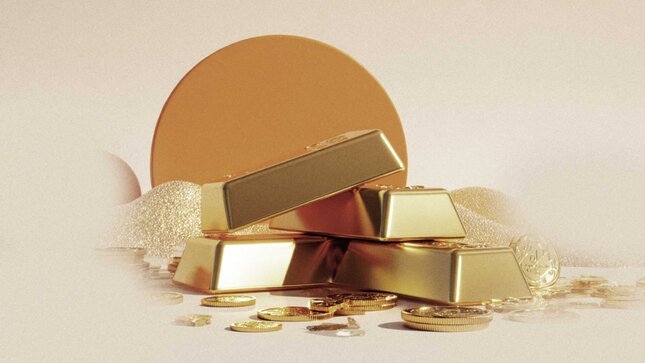
The price of gold (XAU/USD) rose to around $4,440 during the early Asian session on Tuesday. The precious metal continues to rise and reaches its highest level in a week amid safe-haven demand, as the Venezuela crisis raises geopolitical uncertainty. Traders will closely monitor key US economic data later on Friday, including the Non-Farm Payrolls (NFP) report, for further clues on the outlook for monetary policy.
Tensions between the United States and Venezuela have escalated to a new level after the US military’s Delta Force attacked Venezuela and arrested its president Nicolas Maduro and his wife on Saturday. On Monday, Maduro pleaded not guilty to the charges brought against him by the United States in the terrorism and drug cases, beginning an unusual legal battle with major geopolitical repercussions, according to Bloomberg. Rising geopolitical tensions and uncertainty in this region are fueling traditional safe haven assets such as gold.
“The situation surrounding Venezuela has clearly reinvigorated safe haven demand, but it comes on top of existing concerns about geopolitics, energy supplies and monetary policy,” said Alexander Zumpfy, precious metals trader at German Heraeus Metals.
The US Federal Reserve’s dovish outlook is contributing to the yellow metal’s rise. Minutes from the latest Federal Open Market Committee meeting showed that most Fed officials see further interest rate cuts as appropriate as long as inflation declines over time, although they remain divided on when and to what extent to cut. Lower interest rates can reduce the opportunity cost of holding gold, supporting the non-yielding precious metal.
All eyes will be on the US December employment report due on Friday. The US economy is expected to see 55,000 jobs added in December, while the unemployment rate is expected to fall to 4.5% during the same period. If reports show a stronger than expected result, this could support the US dollar and undermine US dollar-denominated commodity prices in the near term.
Frequently asked questions about gold
Gold has played a major role in human history as it has been widely used as a store of value and a medium of exchange. Currently, apart from its luster and use in jewellery, the precious metal is widely viewed as a safe haven asset, meaning it is a good investment during turbulent times. Gold is also widely viewed as a hedge against inflation and currency depreciation because it is not dependent on any specific issuer or government.
Central banks are the largest holders of gold. In their aim to support their currencies in turbulent times, central banks tend to diversify their reserves and purchase gold to improve the perceived strength of the economy and the currency. High gold reserves can be a source of confidence for a country’s solvency. Central banks added 1,136 tons of gold worth about $70 billion to their reserves in 2022, according to data from the World Gold Council. This is the highest annual purchase since records began. Central banks in emerging economies such as China, India and Turkey are rapidly increasing their gold reserves.
Gold has an inverse relationship with the US dollar and US Treasuries, which are major reserve assets and safe havens. When the value of the dollar declines, gold tends to rise, enabling investors and central banks to diversify their assets in turbulent times. Gold is also inversely correlated with risk assets. A rise in the stock market tends to weaken the price of gold, while a sell-off in riskier markets tends to favor the precious metal.
The price can move due to a wide range of factors. Geopolitical instability or fears of a deep recession could cause the price of gold to rise rapidly due to its safe-haven status. As a lower-yielding asset, gold tends to rise as interest rates fall, while a higher cost of money usually negatively impacts the yellow metal. However, most of the moves depend on how the US Dollar (USD) behaves as the asset is priced in Dollars (XAU/USD). A stronger dollar tends to keep the price of gold in check, while a weaker dollar is likely to push gold prices higher.